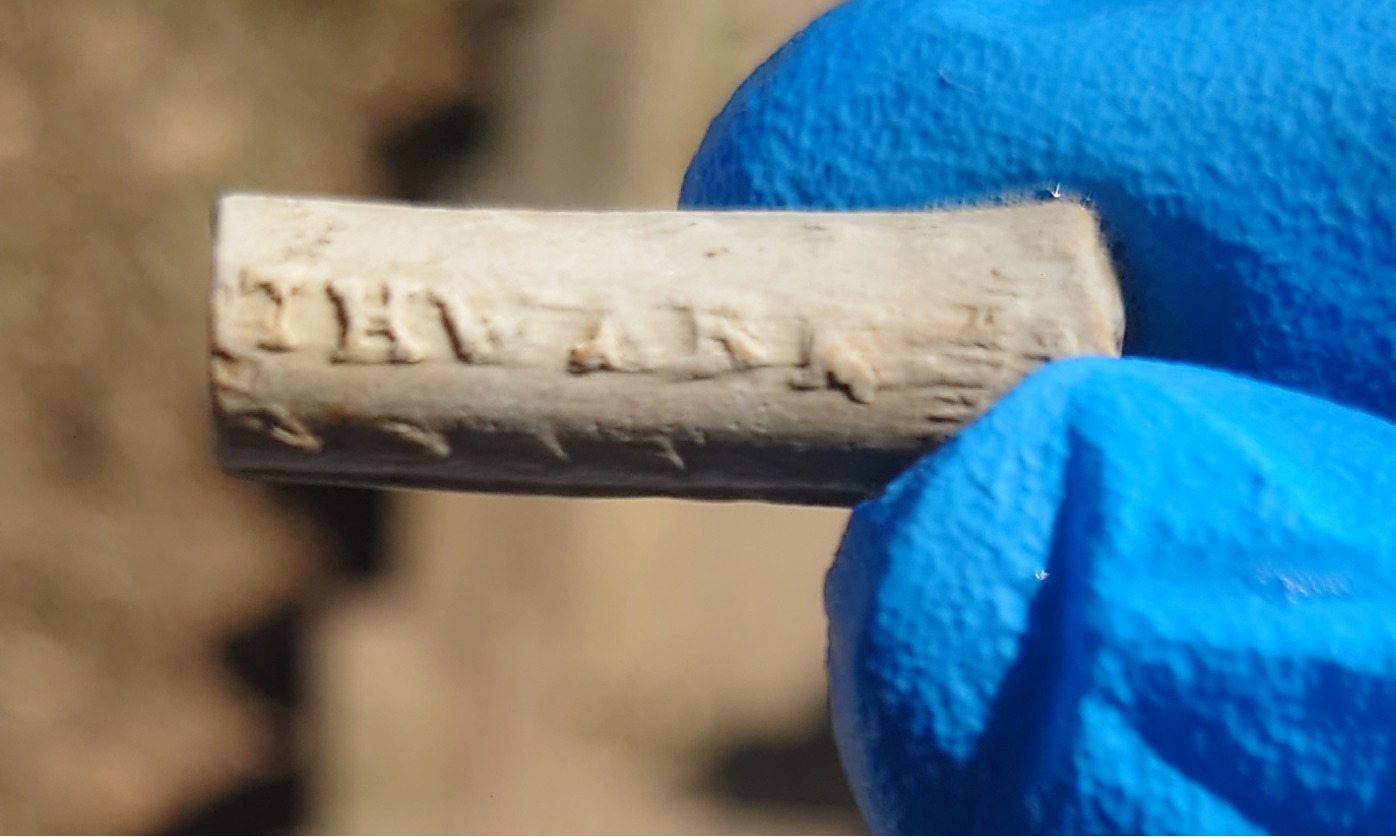
I washing this pipe stem when my fingers felt something my eyes had missed!
It says THWARK as you can see, indicating it was made in the area of Bankside (Southwark). There were many pipe-makers in the area. Unfortunately the marks on the other side, which could indicate a name, have worn too much to be easily readable.
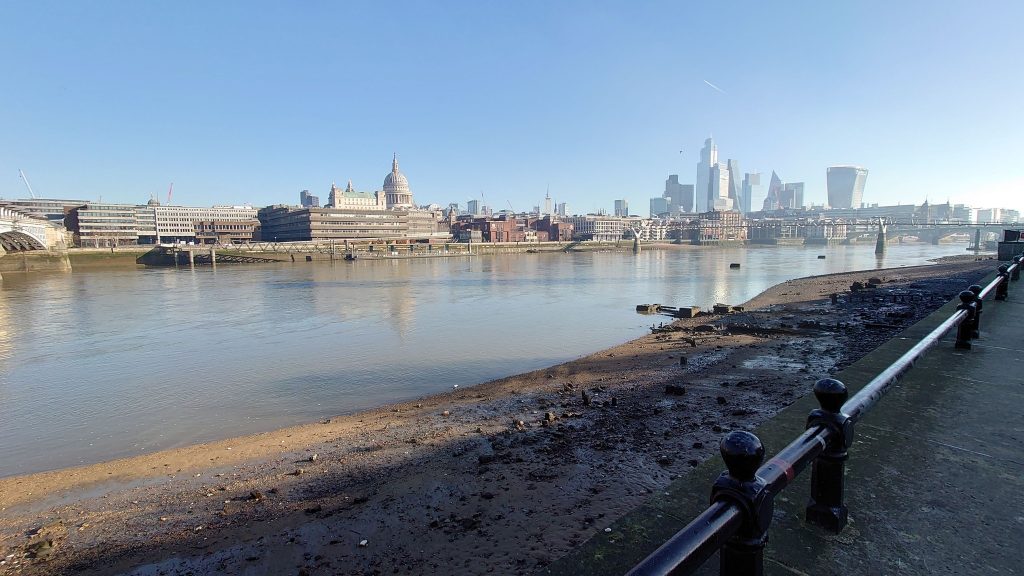
It’s a sign of what a total n00b I am to mudlarking that on my first trip yesterday, I may have absent-mindedly rejected the first clay pipe stem I saw as a piece of modern cable insulation! I was only when I then saw a few together that I realised what a complete eejit I was being.
Clay pipes were the only real option for European smokers from the introduction of tobacco until the Victorian era, when they were mostly replaced by cheap cigarettes and pipe smokers switched to other materials such as briar wood. Pipes can therefore be very useful indeed for archaeologists as dating evidence, as specialists can very accurately date their manufacture.
Clay pipes were mass produced, cheap and pretty much disposable, being replaced when they got broken or gunked up with the inevitable tar. Pubs would often offer them free when you bought tobacco, selling the pipes ready-filled. The earliest pipes are simple one-hitters, taking barely a pinch of the precious stuff. Later pipes have larger, more decorative bowls. The size of the pipe bowl increased as tobacco became cheaper, made possible by plantation slavery.
Here’s how they are made:
Here’s a Pathé video showing an expert making them in 1952 – Rex Key mentions the company featured:
This video includes the same factory in 1938:
For hundreds of years, smokers deliberately or accidentally turned their pipes into river litter, and they are still there for us to find. The multicoloured plastic vapes, lighters and whatnot that our generations of smokers have disposed of as carelessly will leave similar debris.
Decorative pipes are now rarer finds on the foreshore, so it might be a wee while before I have anything exciting to show you. Plenty of them out there already though, so please enjoy: